






Why Stainless Steel Tubes Are the Preferred Choice in the Pharmaceutical Industry
- Views:0
- Author:
- Publish Time:2026-10-15
- Origin:
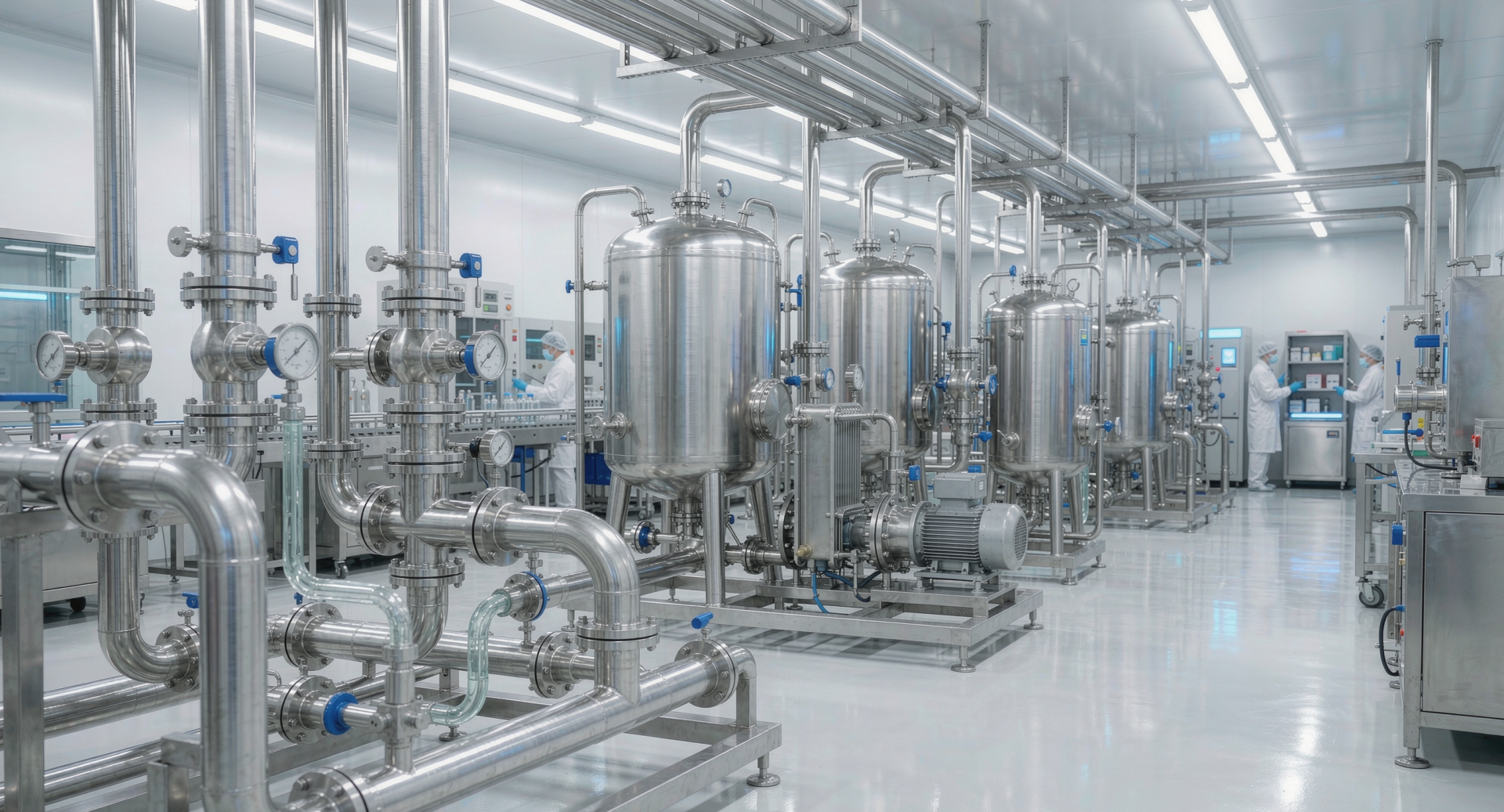
In pharmaceutical manufacturing, process integrity, biosecurity, and contamination prevention are safety-critical priorities. High-purity stainless steel tubing serves as the backbone of modern sanitary fluid transport, providing the smooth surface finishes, chemical inertness, and thermal stability required to pass stringent global health audits and protect drug safety.
5 Key Advantages of Stainless Steel Tubes in Pharmaceutical Systems
Ultra-Smooth Surface Finishes & Microbial Defense: High-purity pharmaceutical tubes—specifically grades like 316L—undergo precision internal mechanical polishing and electropolishing to achieve ultra-smooth surface roughness values below $Ra \le 0.38\ \mu m$ (15 $\mu\text{in}$). This non-porous, mirror-like interior eliminates microscopic pits where biofilms and bacteria (such as Pseudomonas) can adhere, ensuring zero contamination during fluid transfer.
High Corrosion Resistance to CIP/SIP Chemicals: Pharmaceutical process lines undergo continuous Clean-In-Place (CIP) and Steam-In-Place (SIP) cycles using aggressive caustic wash solutions, acid sanitizers, and superheated steam at temperatures exceeding 130°C. Molybdenum-alloyed 316L stainless steel tubes withstand continuous thermal cycling and chemical exposure without surface pitting, rouge, or chemical leaching into sensitive biological formulations.
Strict Adherence to ASME BPE & FDA Regulatory Standards: Sanitary stainless steel tubing is manufactured to rigorous international bioprocessing equipment codes, including ASME BPE, ASTM A270 (S2 specification), and EN 10217-7. Fully traceable mill test reports (MTRs) and strict material heat verification ensure pharmaceutical operators comply with FDA Good Manufacturing Practices (cGMP) and EU Annex 1 sterile manufacturing regulations.
Versatile Utility Across Critical Sanitary Systems: Stainless steel sanitary tubing is specified across all cleanroom utility networks. Key applications include Water-For-Injection (WFI) circulation loops, Purified Water (PW) distribution headers, bioreactor feed manifolds, shell-and-tube heat exchangers, and sterile filling line piping where fluid containment and zero-dead-leg geometry are required.
High Pressure Capability & Extended Service Life: Featuring seamless or fully re-drawn orbital-welded construction, stainless steel sanitary tubes handle continuous operating pressures exceeding 10 to 16 bar without wall deformation or mechanical failure. With a service lifespan easily surpassing 25 to 30 years, investing in high-purity stainless steel tubing minimizes plant shutdowns, reduces validation re-certification costs, and maximizes operational uptime.
Upgrade Your Pharmaceutical Piping Infrastructure Today
Integrating ASME BPE-certified 316L stainless steel tubing into your sanitary liquid networks ensures complete product purity, effortless SIP sterilization, and continuous regulatory compliance.
Contact our bioprocessing engineering specialists today to request product catalogs, surface finish test certifications, and custom factory-direct quotes for your next pharmaceutical facility project.


