






4 Essential Stainless Steel Heat Treatment Processes: A Technical Guide
- Views:0
- Author:
- Publish Time:2026-08-13
- Origin:
Stainless steel is globally renowned for its strength, corrosion resistance, and versatility across industrial applications. However, thermal processing can boost its mechanical properties exponentially. By altering the metal's internal microstructure, heat treatment allows engineers to tailor stainless steel for extreme operational demands—whether you need maximum ductility for complex forming or extreme surface hardness to resist severe wear.
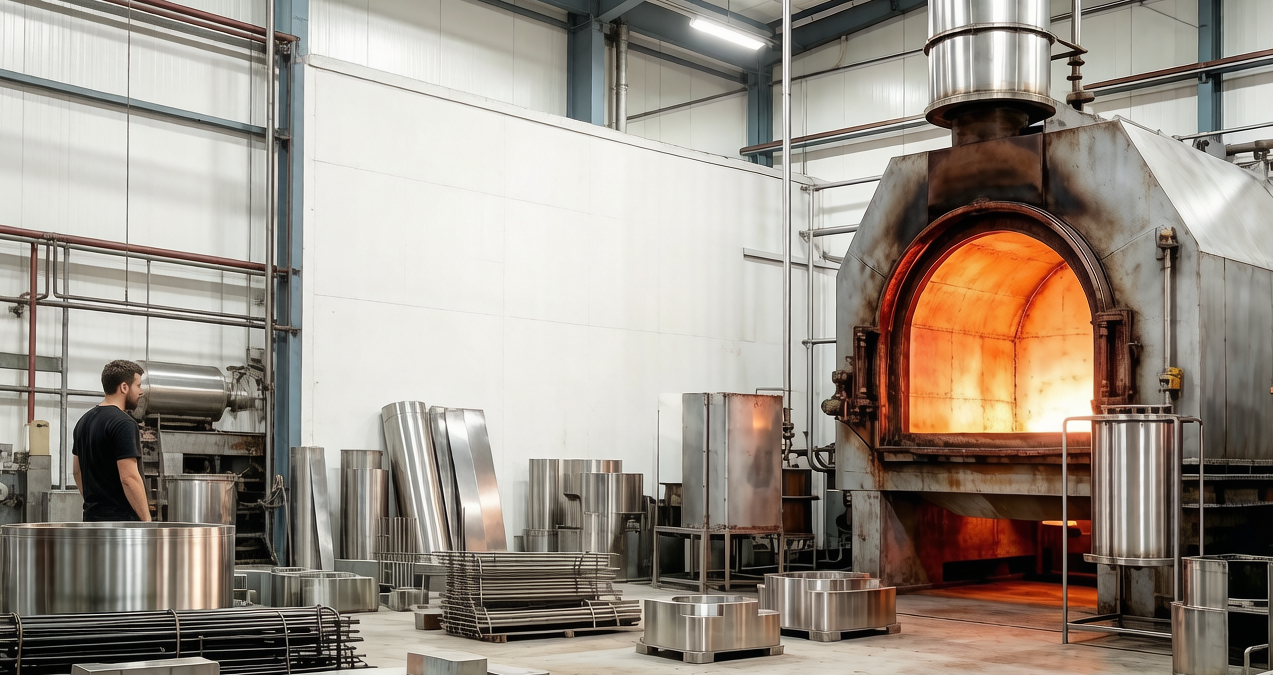
4 Core Stainless Steel Heat Treatment Methods
Annealing (Stress Relief & Superior Workability): This process involves heating the steel to high temperatures (typically between 1000°C and 1120°C depending on the alloy) followed by slow, controlled cooling. This relieves up to 90% of internal stresses caused by cold rolling or welding, refining the grain structure and dramatically improving ductility. Annealed stainless steel is far easier to machine and form without cracking, making it the industry standard for deep-drawn components like automotive exhaust stampings and intricate precision tubing.
Quenching (Maximum Hardness & Wear Resistance): Quenching requires heating martensitic stainless steel above its critical transformation temperature and rapidly cooling it in water, oil, or forced air. This rapid cooling locks the microstructure into hard martensite, boosting surface hardness up to 58–60 HRC in grades like 420 or 440C. Because it delivers extreme abrasion resistance, quenched stainless steel is heavily relied upon for surgical scalpels, industrial cutting shears, and high-wear pump impellers.
Tempering (Balancing Toughness & Mechanical Strength): Applied directly after quenching, tempering reheats the hardened steel to a lower temperature range (usually 150°C to 400°C) before cooling it again. This step relieves extreme internal tension to eliminate brittleness, boosting impact toughness by 30% to 50% while retaining high yield strengths exceeding 1,000 MPa. It is vital for heavy-duty structural fasteners, automotive transmission gears, and drive axles that must withstand intense shock loads without fracturing.
Solution Annealing (Restoring Peak Corrosion Resistance): Critical for austenitic grades like 304 and 316, solution annealing involves heating the metal to 1050°C–1150°C to fully dissolve chromium carbide precipitates back into solid solution, followed by immediate water quenching. This process eliminates intergranular corrosion risks and restores the alloy's full pitting resistance in aggressive chemical environments. As a result, solution-annealed steel is widely specified for pharmaceutical mixing tanks, offshore oil platform piping, and commercial food processing vessels.
Elevate Your Material Performance Today
Selecting the correct heat treatment process—whether annealing, quenching, tempering, or solution annealing—is vital for ensuring your metal components meet rigorous industry standards and performance expectations.
Selecting the right heat treatment ensures your components withstand their exact operational environment, helping you maximize durability, optimize production costs, and prevent premature equipment failure. Contact our metallurgical engineering team today to discuss your project requirements and optimize your stainless steel specifications.


